Many people do not need more sleep data. They need a better memory of how the night actually felt.
That is the real problem.
By late afternoon, “last night” often collapses into a vague impression: bad, okay, restless, weird. When you try to improve sleep, that vagueness makes patterns harder to see.
The broken assumption
Most sleep tools assume the answer is another score, another dashboard, or more sensor output.
But a score does not tell you everything you need:
- It does not capture how rested you felt when you woke up
- It does not capture whether today feels heavy, sharp, or depleted
- It can make rough nights feel more judgmental instead of more understandable
What actually helps
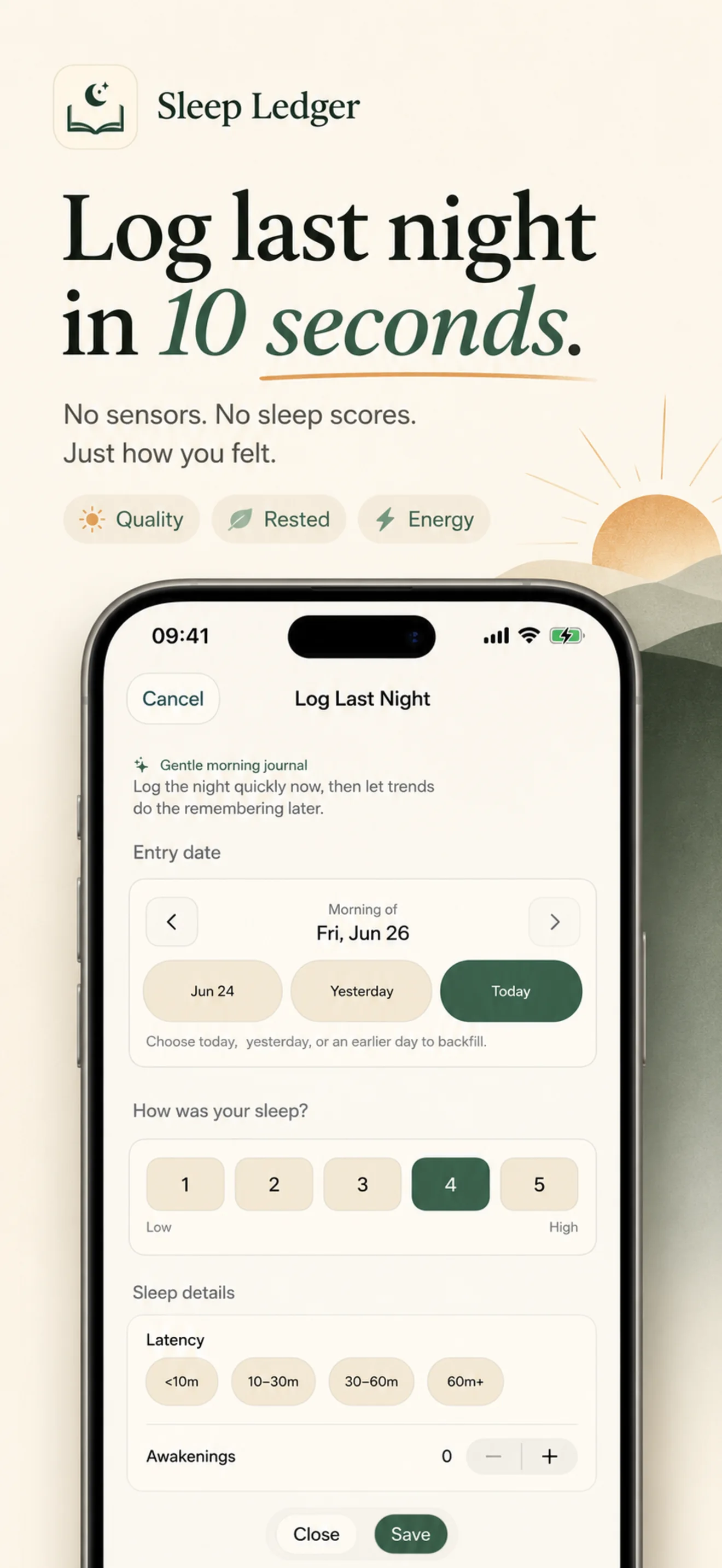
The useful starting point is a short subjective record you can keep doing:
- How was sleep quality?
- How rested did you feel?
- How is your energy today?
This gives you a repeatable signal that stays grounded in lived experience.
Why this matters after one week
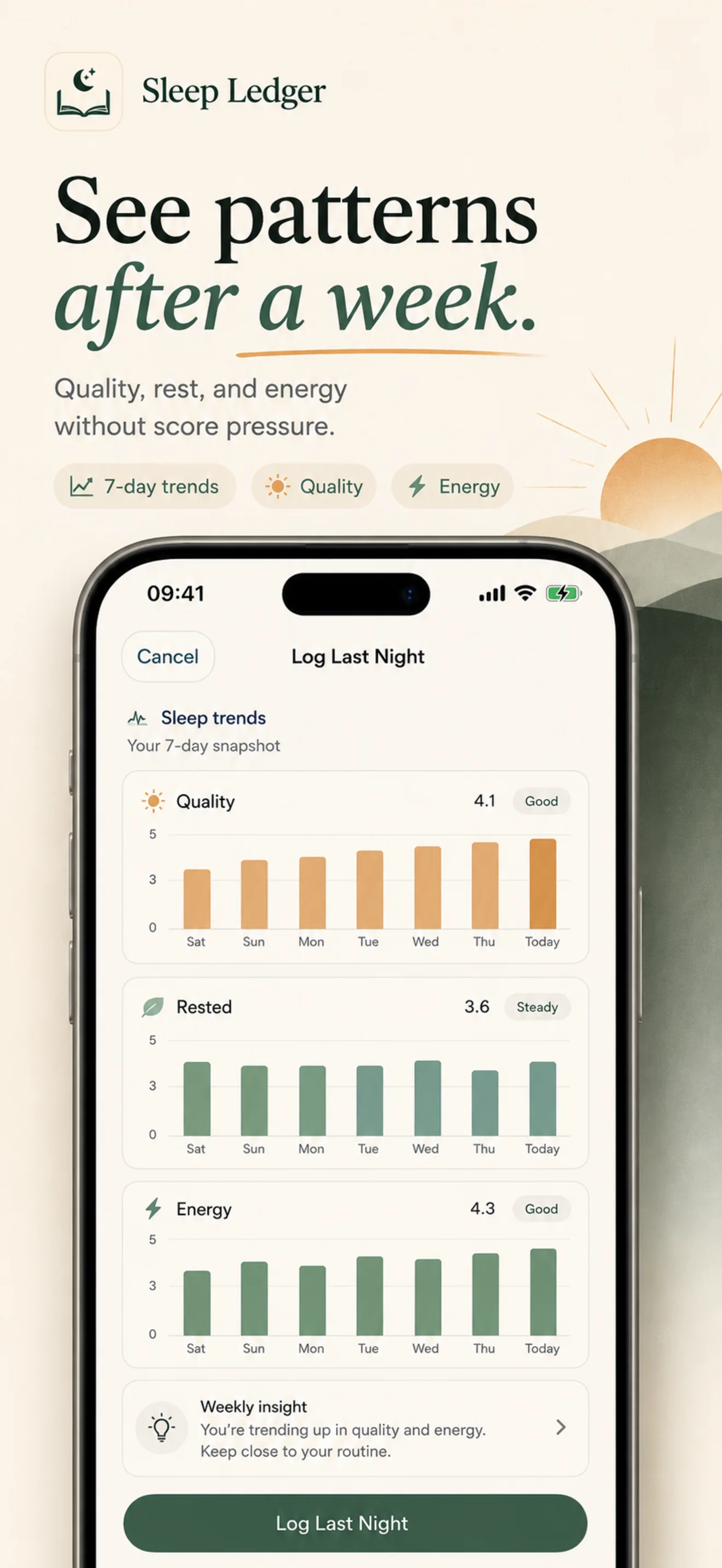
A single bad night can feel dramatic. A week of subjective logs is more useful. It lets you ask better questions:
- Were rough nights clustered around stress or travel?
- Did energy improve after a routine change?
- Are you reacting to one night, or seeing a real pattern?
This is where a subjective sleep journal becomes more valuable than another score.
Where SleepLedger fits
SleepLedger is built around this point of view:
- A 10-second morning check-in
- Weekly pattern visibility
- Optional ISI when you want more structure
- Optional exports when you want to bring patterns into a conversation
The goal is not perfect self-diagnosis. The goal is a calmer, clearer record of what your sleep is actually doing. If you want a practical next step, read our 10-second morning check-in habit guide or the rough week review guide.