Most sleep journals fail because they ask for too much detail at the wrong time. A consistent workflow is simple: use fixed prompts, keep entries short, and review weekly trends instead of chasing one-night fluctuations.

1. Lock one morning input window
Pick a short window after waking up. Avoid making check-ins a “when I remember” task. Consistency improves when it is tied to a stable trigger like unlocking your phone or getting your first glass of water.
2. Keep the daily prompt set small
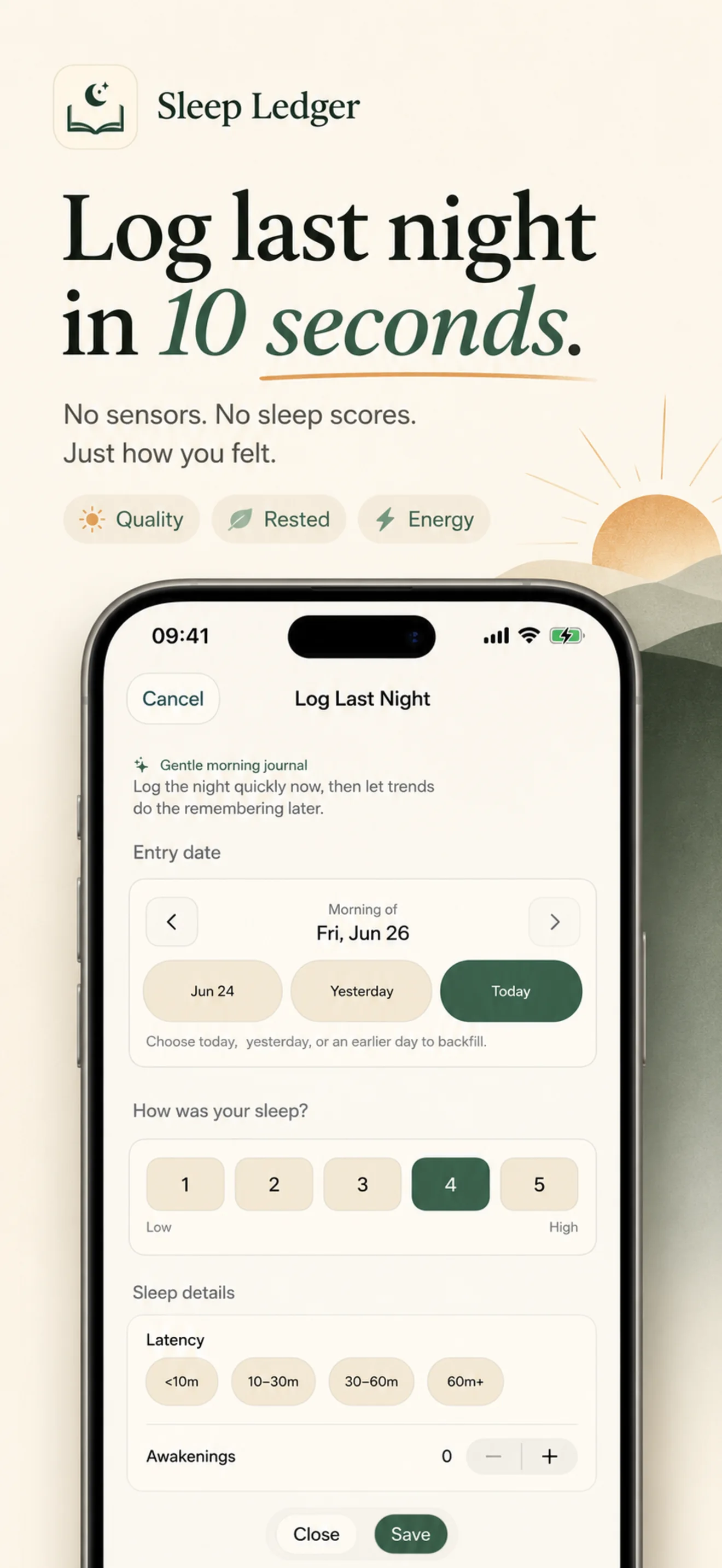
Use the same three core prompts every morning (takes about 10 seconds):
- Sleep quality (1-5)
- How rested you felt (1-5)
- Energy today (1-5)
Optional notes should stay short. One sentence about stress, caffeine timing, or late exercise is enough.
3. Add one weekly review block
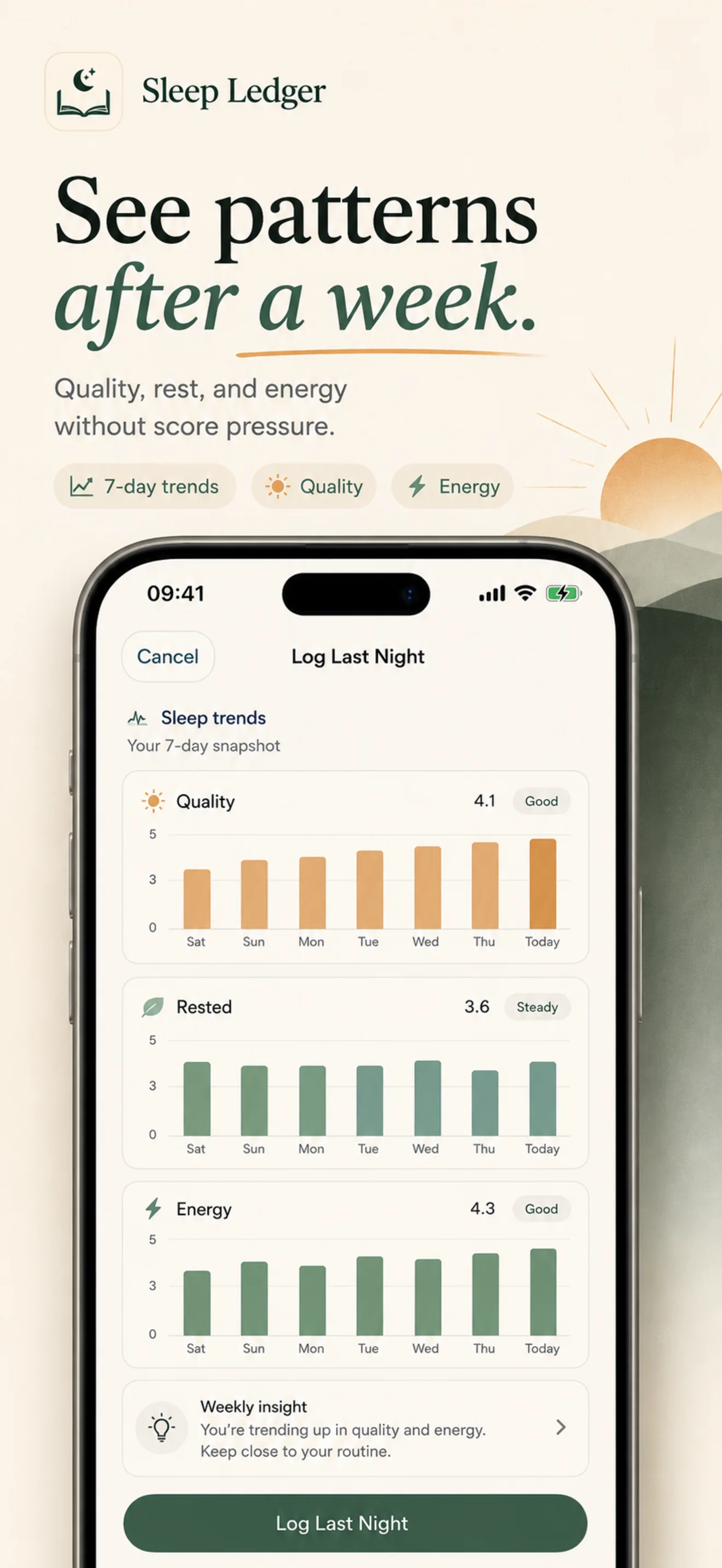
Set a recurring time once a week to review entries. Look for recurring clusters:
- Low quality nights after late screen time
- Weekend vs weekday bedtime drift
- Nights with positive recovery signals
4. Use exports for conversations, not perfection
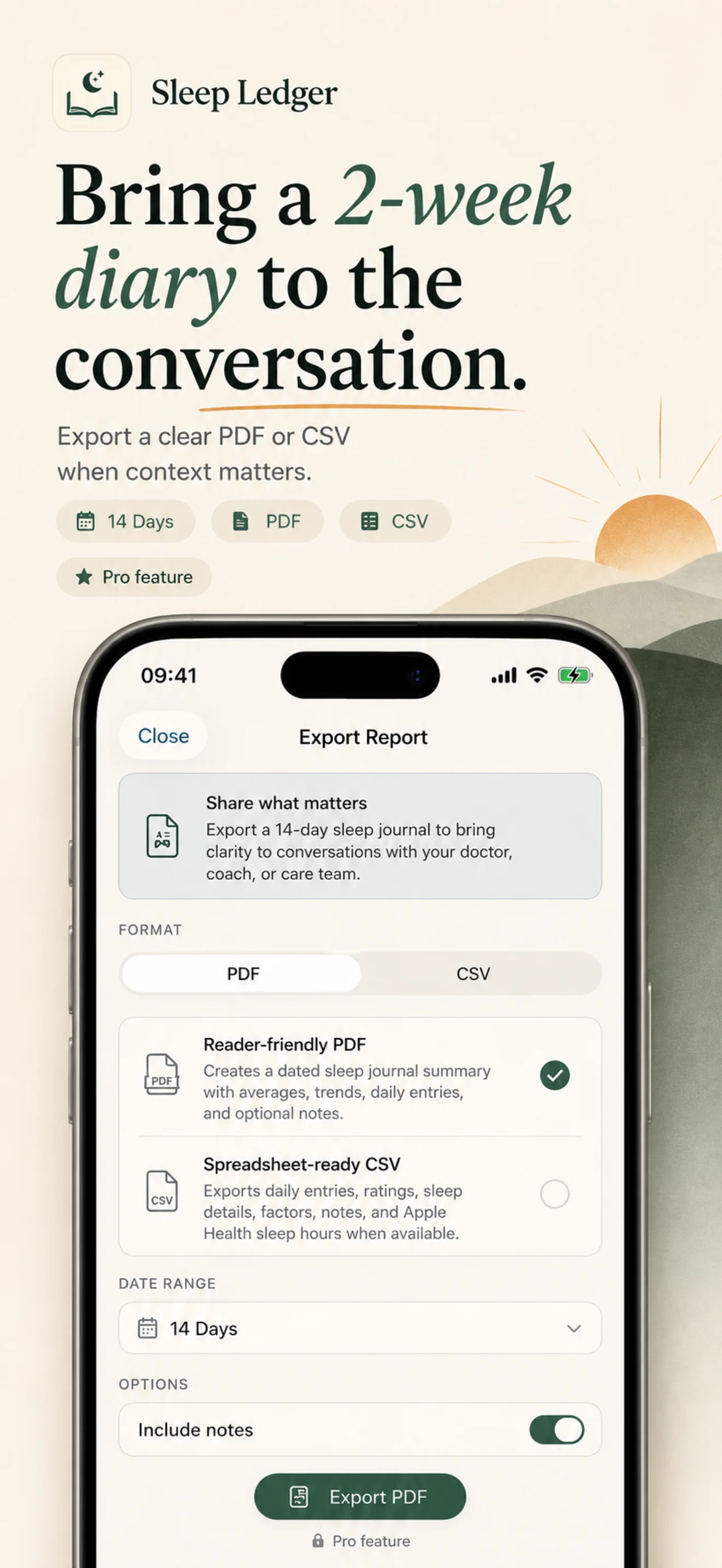
If you discuss sleep with a clinician, export a concise summary. The goal is pattern visibility, not perfect self-diagnosis.
SleepLedger is built around these constraints: short morning flow, readable trend context, and exports when needed. If you want the reasoning behind this approach, read why subjective sleep matters more than another score.