Clinician conversations work better when you bring patterns, not scattered anecdotes. A short summary can be built in 15 minutes.

Step 1: Define your review window
Start with the most recent 1-2 weeks. The NHLBI notes that keeping a sleep diary for 1-2 weeks before an appointment can help a clinician understand sleep problems and related activities.
Step 2: Highlight repeating patterns
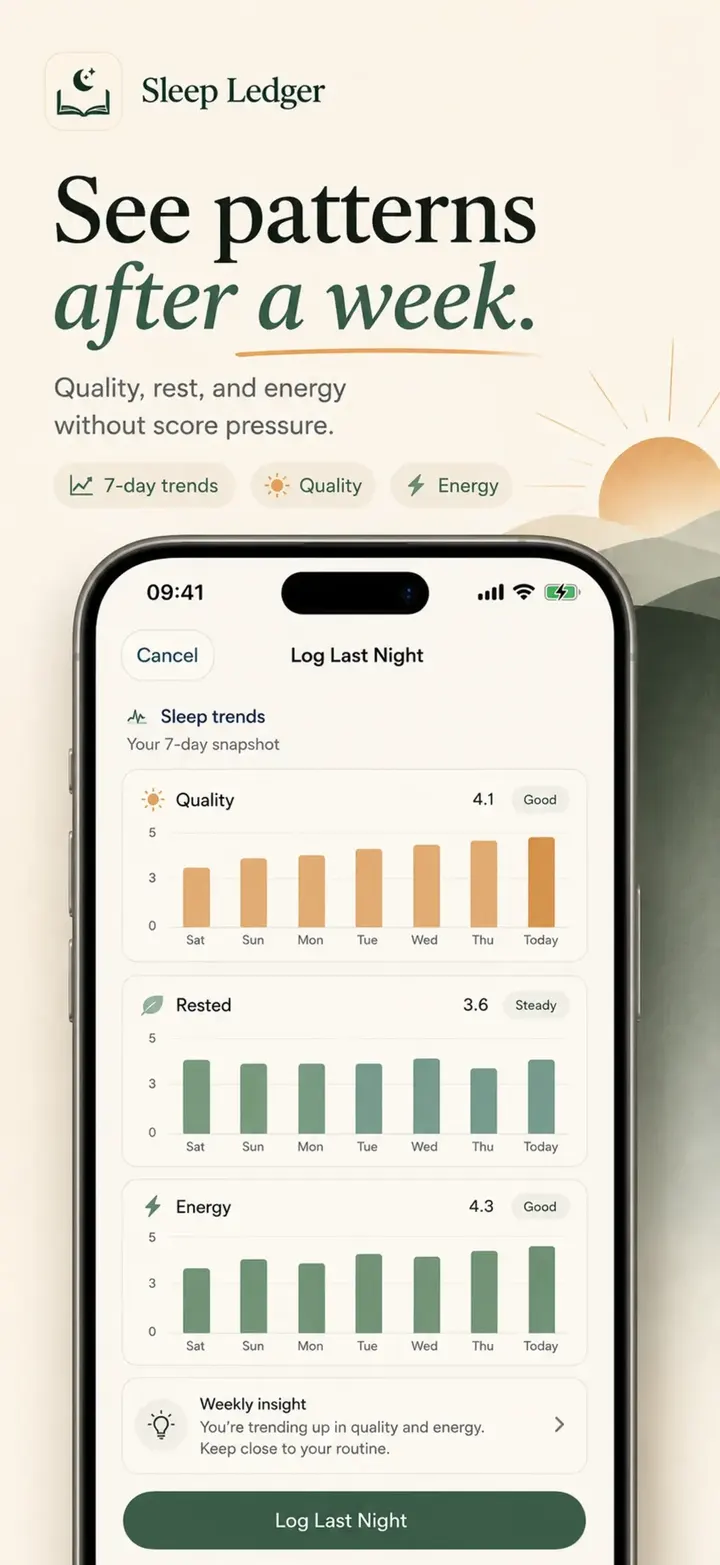
Focus on repeat events instead of one-off nights:
- Bedtime variability
- Clusters of low quality nights
- Daytime energy dips after specific routines
Step 3: Add context notes
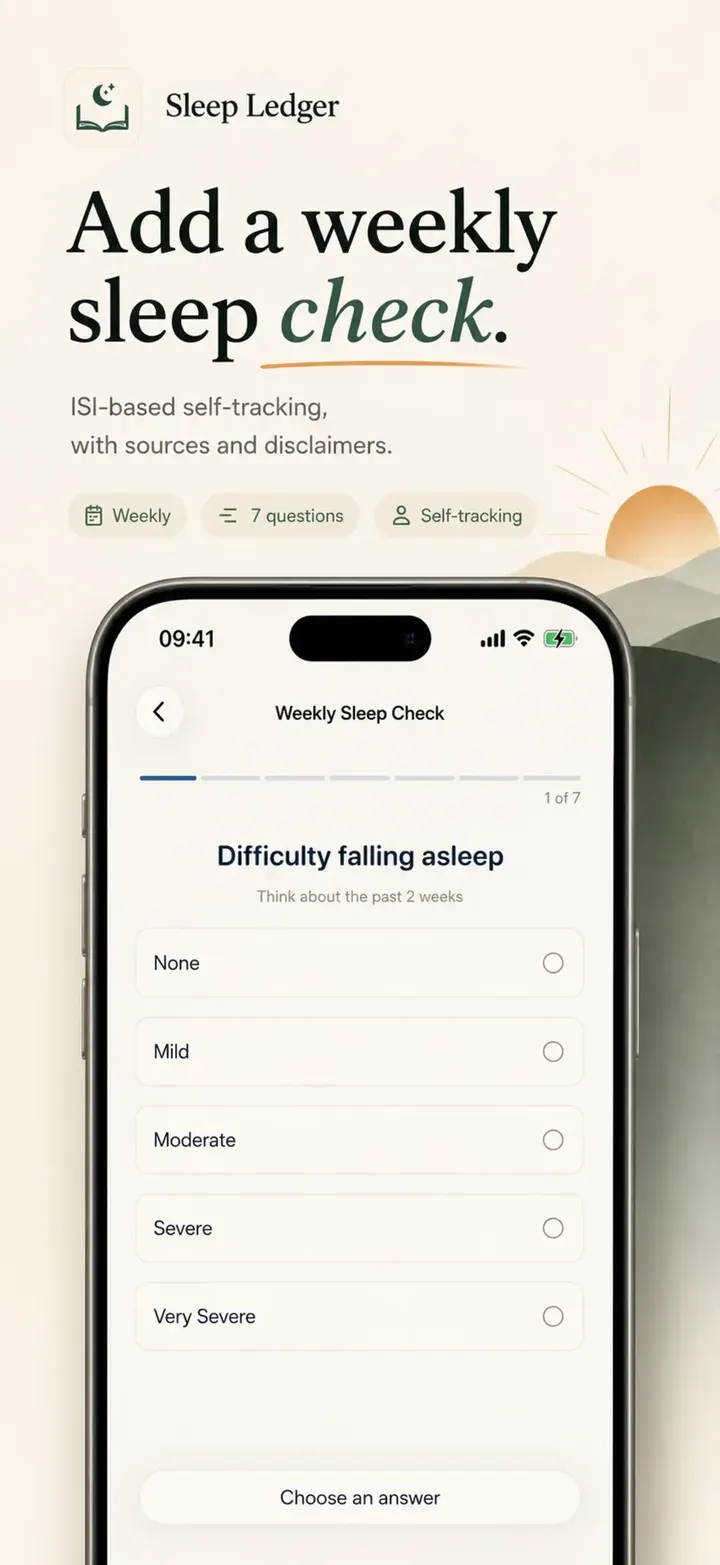
For each pattern, add one sentence of context such as stress periods, travel, or schedule shifts. This helps separate environmental causes from persistent symptoms.
Step 4: Export and annotate
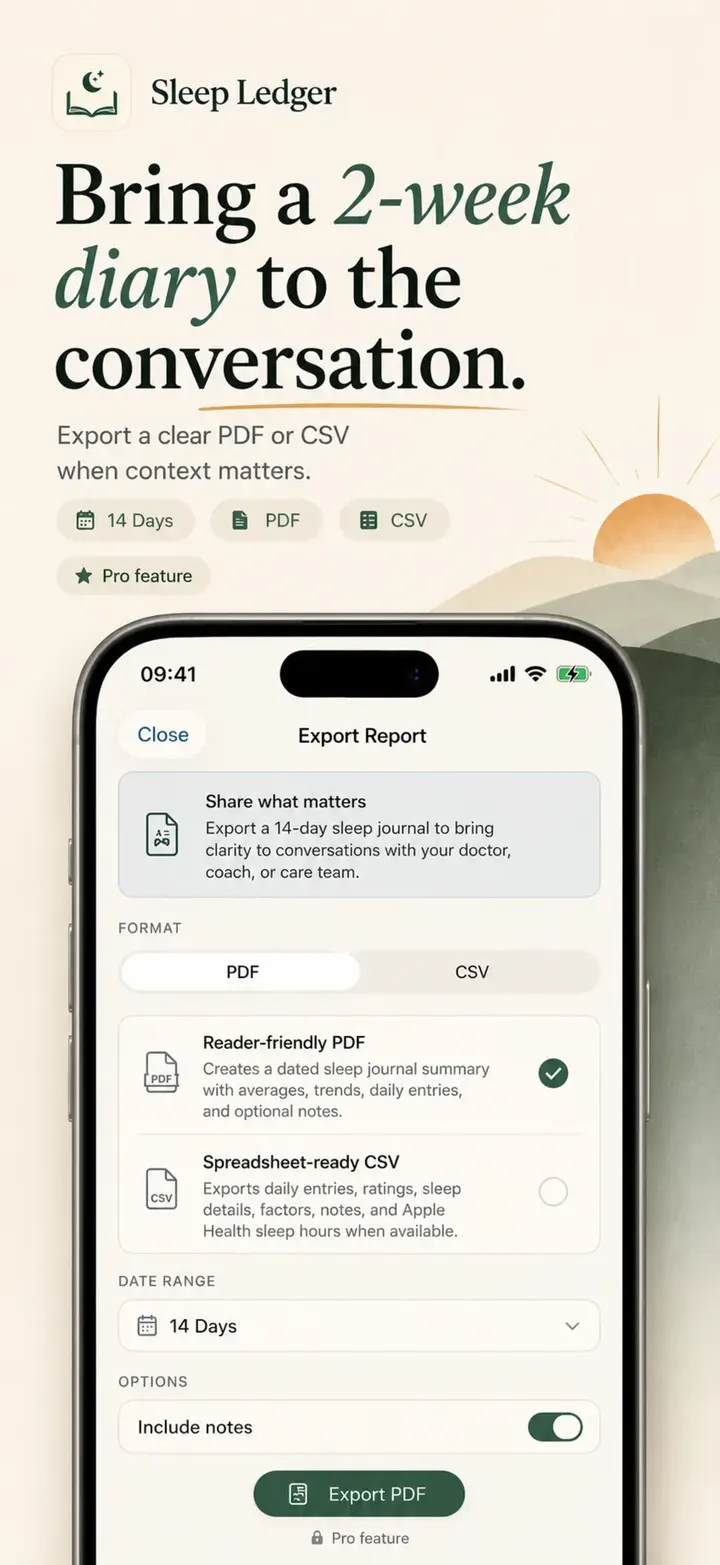
Export your summary before the appointment. Add two or three specific questions you want answered, such as whether current symptoms justify further evaluation.
SleepLedger Pro includes PDF and CSV exports so you can generate and share concise summaries without copying data manually. This is a supporting workflow, not the main daily job. Learn more about Pro features or read our privacy policy to understand how your data is protected.
Sources & References
Consumer sleep records may support a conversation, but the AASM says consumer technology should not replace validated diagnostic testing or a comprehensive clinical evaluation. A week is a practical review interval, not a validated minimum sample size. Missing entries and changing circumstances limit what you can infer, and an association does not establish a cause. This article is informational only, not medical advice or a diagnosis.