A 10-second check-in sounds easy, but habits fail when friction is hidden. The fix is to reduce setup choices and predefine your fallback behavior.

Start with an if-then rule
Write a simple implementation intent:
“If I unlock my phone after waking up, then I open SleepLedger and complete my check-in before social apps.”
The wording matters because it turns the habit into a trigger-driven action instead of a motivation test.
Use minimum viable consistency
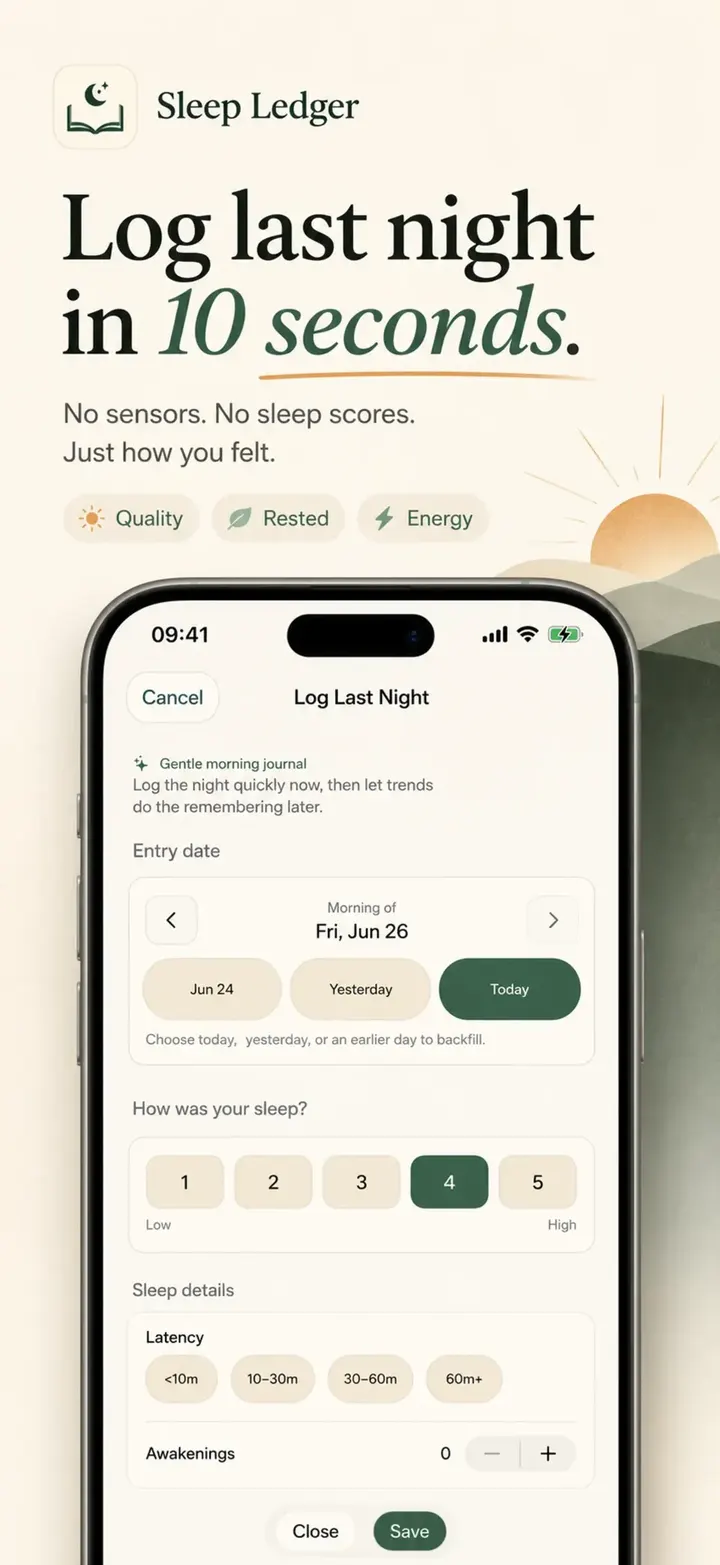
On difficult nights, do not skip entirely. Submit the minimum check-in and leave note fields empty. Keeping the record alive is more important than writing long reflections every day.
Keep the weekly signal loop
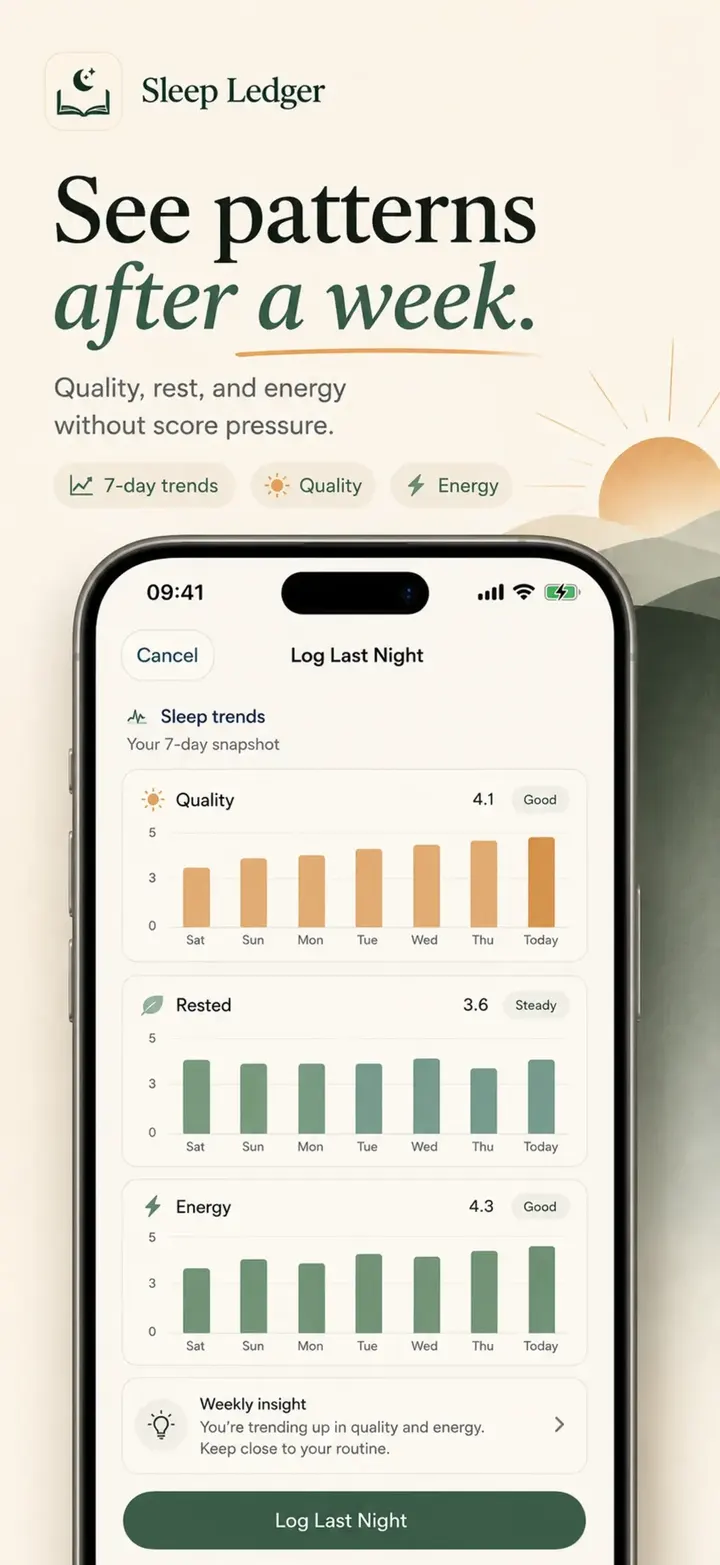
Once a week, review your trend changes and annotate one hypothesis. Example: “Energy scores improved after moving caffeine cutoff to 2 PM.” Then test one adjustment for the next week.
SleepLedger supports this approach with compact prompts and trend reviews that do not overload the daily routine. For more perspective on why this kind of subjective record matters, read why subjective sleep matters more than another score.
Sources & References
The NHLBI sleep diary is an example of a structured record covering sleep quality, sleep quantity, daytime sleepiness, and relevant context. A week is a practical review interval, not a validated minimum sample size. Missing entries and changing circumstances limit what you can infer, and an association does not establish a cause. SleepLedger’s short check-in is informational only, not medical advice or a diagnosis, and is not a substitute for care.